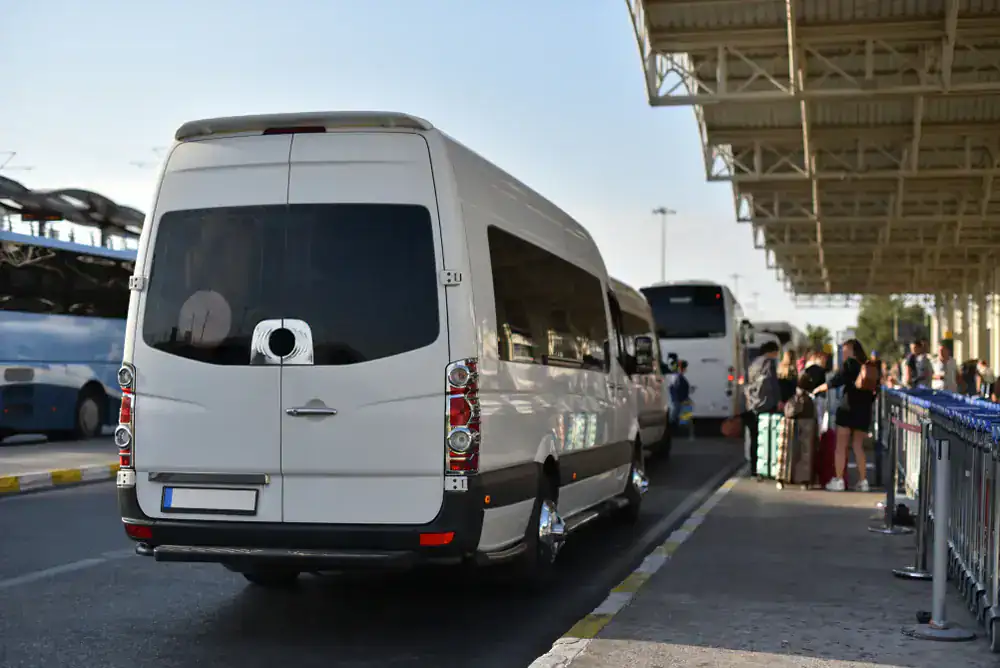
Autonomous vehicles are reshaping airport transportation in 2025, bringing smarter shuttles, AI-driven logistics, and enhanced passenger experiences to ground transport services.
Share:

Summary:
The most dramatic changes are happening behind the scenes at airports worldwide. Autonomous ground vehicles like the Auto-DollyTug can pick up containers and transport them directly to aircraft, operating from baggage halls to aircraft side with complete automation. These aren’t just concept vehicles—they’re already working at major airports like Changi.
The switch from traditional diesel fleets to electric autonomous vehicles could cut carbon emissions by up to 60% while addressing a significant safety problem, as ground damage accidents cost the industry an estimated $10 billion annually by 2035. For travelers, this means fewer delays caused by ground operations and more reliable departure times.
Passenger-focused autonomous vehicles like the Auto-Shuttle can carry up to 10 passengers and are currently being tested at Ottawa Airport and Teesside Airport in the UK. These vehicles represent the future of airport transportation services, offering travelers a glimpse of what’s coming to major hubs like Philadelphia International.
The technology addresses real passenger pain points. Airport transportation has traditionally been stressful, with travelers dealing with traffic, parking struggles, and time constraints. Autonomous shuttles eliminate many of these concerns by providing predictable, reliable service that doesn’t depend on human factors like driver availability or traffic navigation skills.
Major companies like Waymo are already expanding autonomous vehicle testing to airports, with San Francisco International Airport recently approving testing permits, following successful operations at Phoenix’s Sky Harbor since 2023. This expansion signals that autonomous airport transportation isn’t a distant future concept—it’s happening now.
The passenger experience benefits are significant. Unlike traditional airport car service that depends on human drivers navigating complex terminal layouts, autonomous vehicles use precise mapping and sensor technology to optimize routes. They can communicate directly with airport systems to avoid construction zones, adapt to gate changes, and provide passengers with real-time updates about their journey.
Smart airports are implementing autonomous vehicles alongside warehouse automation and AI-powered systems to streamline operations and enhance efficiency. This infrastructure transformation creates the foundation for next-generation airport transportation services.
Vehicle-to-infrastructure communication allows autonomous vehicles to interact with traffic lights, road signs, and other vehicles, enhancing traffic efficiency, reducing congestion, and improving safety. At airports, this means autonomous shuttles can coordinate with terminal operations, gate assignments, and flight schedules in ways human drivers simply cannot match.
The Federal Aviation Administration is actively supporting this transition. As demand for more efficient airport operations grows, there’s heightened interest in adopting autonomous ground vehicle systems for various airport functions, with the FAA exploring approaches to develop standards and guidance.
For business travelers who value punctuality above all else, these smart systems represent a game-changer. Today’s business travelers expect time, reliability, and comfort as standard features, not extras. Autonomous airport transportation delivers on all three by removing human error from the equation and optimizing every aspect of the journey through data-driven decision-making.
Want live answers?
Connect with a Philadelphia Car & Limo expert for fast, friendly support.
While autonomous vehicles are transforming airport operations, traditional airport transportation services aren’t disappearing—they’re evolving. 2025 is shaping up as a watershed year for the autonomous vehicle industry with new launches and expansions being announced, but the transition will be gradual.
Technological, regulatory, and economic challenges mean adoption will be more gradual than previously thought, with personal vehicles likely benefiting from advanced assistance features rather than full autonomy. This creates opportunities for established airport car service providers to integrate autonomous technology while maintaining the personal service that distinguishes premium transportation.
The most successful airport transportation services in 2025 are those that blend autonomous capabilities with human oversight. Even as full automation progresses, human oversight remains essential, with semi-autonomous systems and improved driver-assist features bridging the gap between manual and fully autonomous driving.
For premium airport car service providers, this technology offers significant advantages. Route optimization becomes more sophisticated, with AI systems analyzing traffic patterns, flight delays, and weather conditions to ensure on-time arrivals. We already monitor flight schedules and traffic patterns for on-time pickups and drop-offs, but autonomous technology makes this monitoring far more precise and responsive.
Autonomous vehicles and AI-driven systems significantly reduce operational costs, enhance delivery efficiency, and contribute to lower emissions. For airport transportation companies, this means the ability to offer more competitive pricing while maintaining higher service standards.
The safety benefits are particularly compelling for corporate travelers and families. Autonomous vehicle companies report very low intervention rates during testing, with comprehensive reporting requirements for any human driver interventions. This data-driven approach to safety exceeds traditional transportation safety protocols.
Business travelers identify general fatigue, time away from loved ones, and work piling up as primary travel drawbacks, with flight cancellations and rescheduling creating the most friction during trips. Autonomous airport transportation directly addresses these pain points through improved reliability and reduced stress.
Nearly a quarter of business travelers say booking ground transport is a headache, with a third focused primarily on punctuality, making rideshare the most popular choice at 36%. Autonomous systems eliminate booking complications through seamless integration with flight schedules and corporate travel platforms.
The technology also addresses the evolving expectations of modern business travelers. Employees want travel opportunities that blend productivity with premium perks, with top desires including stipends for exploration (52%), premium flight upgrades (50%), and personal-use rewards (45%). Autonomous vehicles can provide productive travel time with reliable Wi-Fi, comfortable seating, and distraction-free environments that allow travelers to work or relax during airport transfers.
The focus is on solving everyday pain points with practical innovation, creating travel environments that work better for business through smarter technology, more reliable operations, and better onboard experiences. This philosophy aligns perfectly with what autonomous airport transportation offers—practical solutions to real problems rather than flashy technology for its own sake.
The future of autonomous vehicles is closer than ever, with 2025 set as a pivotal year for technological advancements, policy changes, and commercial deployments driven by AI, sensor technology, and regulatory frameworks. For travelers and transportation providers alike, understanding these changes is crucial for making informed decisions.
The transformation won’t happen overnight, but the benefits are already becoming clear. Reduced emissions, improved safety, enhanced reliability, and better passenger experiences represent the future of airport transportation services. Whether you’re a frequent business traveler or planning a special trip, these technological advances will make your airport transportation smoother, more predictable, and more comfortable.
For those seeking reliable airport transportation services today, we at Philadelphia Car & Limo are already incorporating advanced technologies while maintaining the personal service and attention to detail that autonomous systems can’t fully replace. The future of airport transportation combines the best of both worlds—cutting-edge technology and human expertise working together.
Article details:
Share:
Continue learning: