Factory-built limousines meet federal safety standards that modified stretch limos don't. Discover what makes one safer than the other for your airport transfer.
Share:

Summary:
You’re booking an airport limo service for an important trip. Maybe it’s a wedding party heading to the airport, a corporate group catching a flight, or your family starting a vacation. The vehicle shows up looking polished and professional, but do you actually know what’s underneath that exterior? Not all limousines are built the same way, and that difference can matter more than you think. Some are designed and tested by major manufacturers. Others are cut in half and stretched by third-party shops. The safety gap between those two approaches is real, and it’s something you should understand before your next airport transfer.
Factory-built limousines come from the manufacturer already designed as luxury vehicles. Think executive sedans, SUVs, and luxury vans built to specific safety and engineering standards before they ever leave the production line.
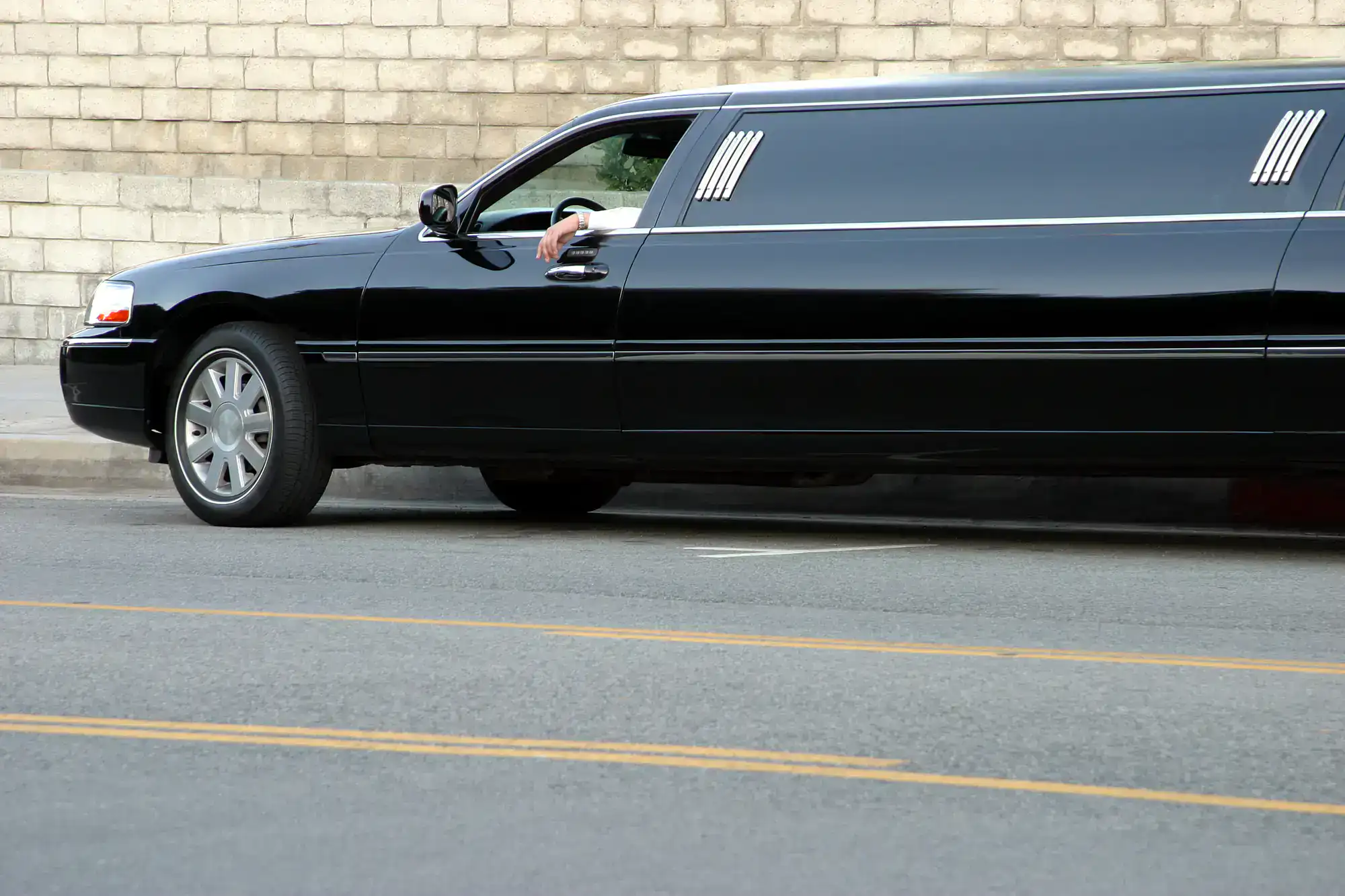
Modified stretch limousines start as regular cars or SUVs. Then they’re literally cut in half. A third-party shop extends the frame, adds extra seating, and rebuilds the interior to create that elongated look most people picture when they hear “limo.”
That process changes everything about how the vehicle performs and protects passengers. The structural cage that normally runs from floor to ceiling gets interrupted. The weight distribution shifts. The braking and handling characteristics are different from what the original manufacturer intended.

Stretch limousines weren’t always part of the mainstream transportation industry. The concept started in the 1920s when companies began modifying vehicles to transport big band leaders, their bands, and equipment. People called them Big Band Buses.
Today, the process is more refined but still follows the same basic approach. A shop purchases a standard vehicle from Ford, Lincoln, Cadillac, or another manufacturer. They strip the interior, cut the vehicle in half from roof to floor, and insert extended steel frame rails to elongate it anywhere from 18 to 30 feet beyond the original length.
The seats get reconfigured. Instead of forward-facing rows, many stretch limos have perimeter seating where passengers face each other. That layout creates a party atmosphere but also removes the structural protection you’d normally get from traditional seating positions.
After the frame is extended, the shop reinstalls body panels, adds luxury features like bars and entertainment systems, and finishes the interior. The entire process can take weeks or even months depending on the level of customization.
But here’s the part that catches people off guard. Because these vehicles are custom-built after leaving the factory, they’re not required to undergo the same crash testing or meet the same federal safety standards as the original vehicle. That’s not a small detail. It’s a fundamental difference in how the vehicle is regulated and what protections you can expect as a passenger.
When a car or SUV is stretched, the modifications affect more than just the length. The structural integrity of the vehicle changes in ways that aren’t always visible.
The factory-designed “cage” that protects passengers during a crash gets interrupted. That cage is made up of pillars running from the ceiling to the floor, reinforced to absorb impact energy and protect the cabin. When a shop cuts the vehicle in half and inserts a new section, that continuous protection is compromised.
Side-impact protection takes the biggest hit. In a regular passenger car, federal standards require curtain airbags and reinforced structures to protect against side collisions. Stretch limos often don’t have those features in the extended section. If a vehicle hits the limo from the side, especially in the middle where there’s no factory structure, the outcome can be much worse than it would be in a standard vehicle.
Weight distribution also changes. The original vehicle was engineered with specific weight limits and balance in mind. Adding several feet of length and extra passengers shifts that balance, affecting how the vehicle brakes, turns, and handles in emergency situations.
Some shops do quality work and follow industry guidelines. Others cut corners to reduce costs. The problem is that from the outside, it’s hard to tell the difference. A poorly modified limo can look just as polished as one built to higher standards.
That’s why asking questions before you book matters. Not because stretch limos are inherently dangerous, but because the quality of the modification work varies widely, and passengers usually have no way to know what they’re getting into.
Want live answers?
Connect with a Philadelphia Car & Limo expert for fast, friendly support.
Safety standards for limousines vary depending on how the vehicle was built and where it’s registered. Factory-built luxury sedans and SUVs follow the same federal safety requirements as any other passenger vehicle. They’re crash-tested, equipped with airbags, and designed to meet specific structural standards.
Stretch limousines operate in a gray area. They’re not always subject to the same testing or safety requirements, especially if they were modified after the original vehicle left the factory. Some states have stricter oversight than others, but federal regulation of modified limousines remains limited.
In New York, regulations have tightened in recent years. Stretch limousine operators are now required to give passengers a safety presentation before the trip begins, covering emergency exits, fire extinguishers, window break tools, and how to use them. Vehicles must have at least two seatbelts in the front seat and one seatbelt for each rear passenger seat.

Not all modification shops operate the same way. Certified shops that work through programs like Ford’s Qualified Vehicle Modifier (QVM) or Cadillac’s Master Coachbuilder (CMC) are held to higher standards.
These programs require shops to comply with applicable Federal Motor Vehicle Safety Standards. They must follow specific industry guidelines for the conversion process, covering design, engineering, manufacturing, and quality control. Shops must also carry a minimum of $5 million in product liability insurance, which provides some level of accountability if something goes wrong.
The certification process isn’t just paperwork. It’s a framework designed to ensure that when a vehicle is modified, the work is done in a way that doesn’t create unnecessary risk. Certified shops use OEM-approved materials, follow specific procedures for reinforcing the frame, and upgrade braking and suspension systems to handle the added length and weight.
That doesn’t mean every certified shop produces perfect work, but it does mean there’s oversight and a standard being followed. When you’re booking an airport limousine service, asking whether the company uses factory-built vehicles or certified-modified stretch limos gives you insight into what kind of safety measures are in place.
For most airport transfers, especially for business travelers, families, or anyone prioritizing reliability and safety, factory-built sedans and SUVs offer a clearer safety profile. They’re engineered as complete vehicles from the start, tested to federal standards, and maintained as designed by the manufacturer.
Stretch limos can still be safe when they’re properly built, well-maintained, and operated by companies that prioritize passenger protection. But the burden is on you as the customer to ask the right questions and choose a provider that takes those details seriously.
Booking an airport limo service shouldn’t feel like a gamble. You should know what kind of vehicle you’re getting, how it’s maintained, and what safety measures are in place. Here are the questions that help you get those answers.
Start by asking what type of vehicle will be used for your trip. Is it a factory-built sedan or SUV, or is it a modified stretch limousine? If it’s a stretch limo, ask whether it was modified by a certified shop following QVM or CMC standards. That tells you whether the vehicle was built to industry safety guidelines or modified without oversight.
Ask about the vehicle’s maintenance schedule. Reputable companies keep detailed records and can tell you when the vehicle was last inspected, what work was done, and whether it passed all required safety checks. If a company can’t or won’t provide that information, that’s a red flag.
Find out whether the drivers are licensed and background-checked. Professional airport transportation companies hire chauffeurs who go through training, hold the proper licenses, and have clean driving records. Ask how long the driver has been with the company and whether they’re familiar with the airports you’re traveling to.
Ask about insurance coverage. A legitimate limousine service carries commercial insurance that covers passengers in the event of an accident. If the company hesitates or gives vague answers about insurance, move on to another provider.
Pricing transparency matters too. Ask what’s included in the quoted price and whether there are additional fees for things like fuel, tolls, waiting time, or gratuity. Hidden charges are frustrating, but more importantly, they’re often a sign that the company isn’t operating with the level of professionalism you should expect.
Finally, ask whether the company offers flight tracking for airport pickups. This isn’t directly related to vehicle safety, but it’s a good indicator of how seriously the company takes service quality. Providers that monitor flights in real time and adjust pickups automatically tend to be more detail-oriented across the board, including vehicle maintenance and driver training.
These questions won’t take long to ask, but the answers will tell you a lot about whether the company prioritizes safety or just wants to book the trip and move on.
Safety doesn’t have to mean sacrificing comfort or convenience. Factory-built sedans and SUVs offer the same level of luxury as modified stretch limos, with the added benefit of meeting federal safety standards from the ground up. For most airport transfers, they’re the smarter choice.
If you do choose a stretch limousine for a special occasion, make sure you’re working with a company that uses certified-modified vehicles, maintains them properly, and employs professional chauffeurs who understand the unique handling requirements of larger vehicles.
The key is asking questions before you book. Don’t assume that all airport limo services operate the same way or that every limousine meets the same safety standards. Companies that take safety seriously will have clear answers and won’t hesitate to provide details about their vehicles, drivers, and maintenance practices.
When you’re ready to book reliable, safe airport transportation in Nassau County, NY, we offer professional service with a fleet maintained to the highest standards and chauffeurs trained to prioritize your safety and comfort on every trip.
Article details:
Share:
Continue learning: