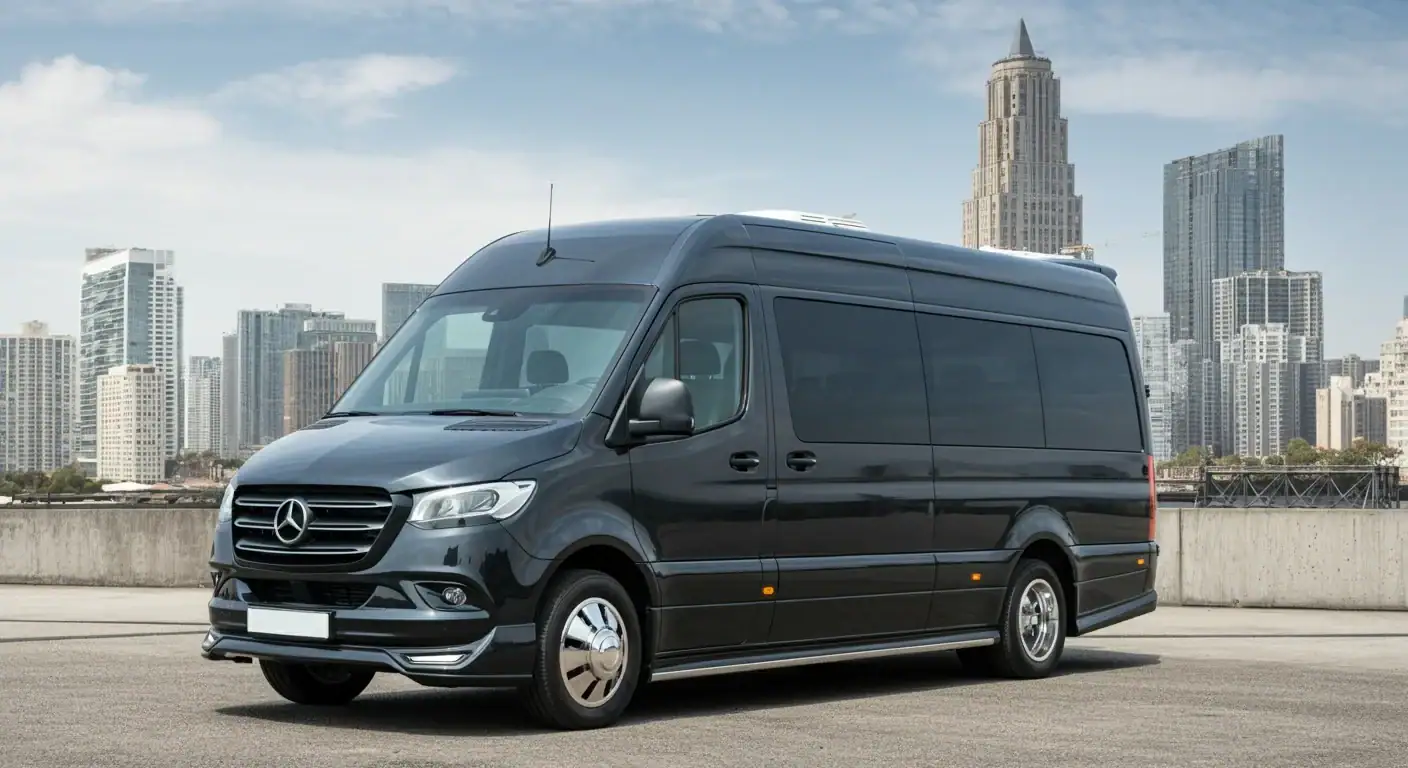
When meetings can't wait and image matters, your transportation choice determines whether you arrive ready or scrambling. Here's what separates professional car services from rideshares.
Share:

Summary:
You’re headed to a critical client meeting. Your flight lands at JFK at 7 AM, and the presentation starts in Manhattan at 9:30. There’s no margin for error, no room for a driver cancellation, and zero tolerance for surge pricing surprises or extended wait times.
This is where the difference between black car service and rideshare stops being theoretical and starts affecting your day, your deal, and your professional reputation. One option is built for convenience. The other is built for business. Understanding which situation demands which service can change how you show up—literally and figuratively.
Let’s examine what actually separates professional transportation from on-demand apps when the stakes are real.
Reliability isn’t just about showing up. It’s about showing up when promised, where promised, without last-minute changes that derail everything downstream.
Professional car services in Nassau County consistently achieve 95-99% on-time pickup performance. Rideshares average closer to 85-90%. That gap compounds fast when you’re managing multiple stops, tight connections, or client-facing commitments. Cancellation rates tell an even sharper story: professional services hold below 2%, while rideshare cancellations regularly exceed 10%.
Seventy-one percent of business travelers report experiencing a rideshare cancellation or failure during time-sensitive moments like airport pickups or early-morning departures. When your ride disappears five minutes before you need to leave for LaGuardia, the cost isn’t just inconvenience—it’s missed flights, delayed meetings, and lost credibility.

Professional car services don’t rely on proximity algorithms or driver availability. We operate on scheduled commitments with dedicated dispatch, vehicle allocation, and backup plans built into every reservation.
When you book executive car service for a 6 AM airport run from Garden City to JFK, that vehicle is assigned the night before. The chauffeur knows the route, the pickup time, and the buffer needed for Long Island Expressway traffic. If there’s an issue, our dispatch team has alternatives ready before you even know there’s a problem.
Flight tracking technology eliminates another layer of uncertainty. Your plane lands 45 minutes late? The driver already knows and adjusts automatically. Early arrival? The car repositions to minimize your wait. This happens without a single text or phone call from you because the system handles it as standard protocol.
Rideshare apps operate differently. Drivers accept rides based on their location and schedule. They can cancel if something better comes along or if the trip doesn’t fit their route. There’s no dedicated assignment, no pre-planning, and no backup if your driver bails ten minutes before pickup. During peak times or in areas with low driver density across Nassau County, wait times stretch from minutes to half an hour or more.
The difference shows up in corporate travel policies. Eighty-two percent of companies now permit chauffeur services specifically because reliability isn’t optional for executive travel, client transport, or time-sensitive business trips. When the meeting matters, the ride can’t be the variable that fails.
Rideshare apps revolutionized casual transportation. Tap a button, car shows up, you go. For errands, social outings, or flexible personal travel, that model works.
Business travel operates under different constraints. Meetings don’t flex. Flights don’t wait. Clients expect punctuality, not explanations about driver cancellations or surge delays.
The rideshare model depends on driver availability and market conditions. During high-demand periods—rush hour on the Northern State Parkway, bad weather, major events at Nassau Coliseum, early morning airport runs—supply tightens and prices spike. Surge pricing can double or triple your fare with zero warning. A $45 ride from Hempstead to Newark becomes $135 because you booked during a busy window.
Driver quality varies dramatically. You might get a seasoned professional in a clean SUV. Or you might get someone new to the platform, unfamiliar with Nassau County, driving a cramped sedan with questionable maintenance. There’s no consistency, no standard, and no recourse if the experience falls short.
Privacy is another gap. Rideshare vehicles are shared spaces. Drivers rotate between passengers all day. Conversations aren’t confidential. Work calls become awkward. Reviewing sensitive documents or discussing strategy isn’t realistic when you’re in the back of someone’s personal car with a stranger up front.
For executives billing at $150+ per hour, lost productivity adds up fast. Thirty minutes spent managing a transportation failure—rebooking, waiting, coordinating backups—costs the company $75 in lost work time. That’s before factoring in the downstream impact of arriving late, flustered, or unprepared.
Professional car services eliminate these variables. You know the vehicle class in advance. You know the service level. You know the trip is private, the chauffeur is vetted, and the pricing is fixed. When business schedules demand precision, approximation doesn’t cut it.
Want live answers?
Connect with a Philadelphia Car & Limo expert for fast, friendly support.
Cost and value aren’t the same thing. The cheapest ride isn’t always the smartest investment, especially when time, image, and reliability carry measurable business impact.
Luxury car service costs more upfront than rideshares. But the real comparison isn’t fare versus fare—it’s total cost of ownership. Fixed-rate pricing eliminates budget surprises. No surge multipliers. No dynamic pricing based on demand. You know the cost when you book, and it doesn’t change.
Corporate accounts simplify expense tracking. Instead of managing individual receipts from multiple rides across different platforms, companies get consolidated billing, itemized reports, and predictable monthly costs. Finance teams can forecast accurately. Employees avoid reimbursement hassles. The administrative overhead drops significantly.
Transparent pricing means you see the full cost before you commit. No hidden fees. No surprise charges for tolls, wait time, or traffic delays. The quote you receive is the price you pay.
Rideshare pricing operates differently. Base fares fluctuate based on demand algorithms. Surge pricing activates during busy periods, sometimes multiplying costs by two, three, or four times the normal rate. You don’t control when surge happens, and you often don’t see the multiplier until after you’ve requested the ride.
Traffic delays add another layer of uncertainty. Rideshares charge by time and distance. A route that should take 30 minutes but stretches to an hour due to congestion on the Grand Central Parkway costs significantly more than expected. We typically quote flat rates for common routes—airport transfers from Nassau County to JFK, LaGuardia, or Newark, point-to-point trips to Manhattan, hourly service—regardless of traffic conditions.
For corporate travel programs, predictability matters. Budget variance creates friction. When ground transportation costs swing wildly based on factors outside your control, forecasting becomes difficult and approvals get complicated. Fixed-rate professional services solve this by removing volatility from the equation.
Companies prioritizing cost control through predictability, not opportunistic savings, find that professional car services often deliver better long-term value. The rate might be higher per trip, but the total cost—including productivity loss, missed connections, and administrative overhead—frequently favors the professional option.
Ground transportation now represents 11-12% of total corporate travel costs, a share that continues growing as programs become more complex. Smart companies treat it as a strategic investment, not just an expense line.
Time is the asset you can’t replace. Every minute spent in transit is either productive or wasted, and the transportation choice determines which.
Professional car services transform travel time into work time. With a trained chauffeur handling navigation and Long Island traffic patterns, you’re free to take calls, respond to emails, review presentations, or prepare for the meeting ahead. Productivity recovery in professional car services hits 90-95%, compared to just 50% in rideshares and essentially zero when self-driving.
The math is straightforward. A CEO or senior executive earning $150 per hour who spends 45 minutes in transit either loses $112.50 in dead time or recovers most of that value by working during the ride. Over a year of regular business travel between Nassau County and Manhattan, that gap translates directly to measurable ROI.
Professional image carries weight in business. How you arrive sets the tone for how you’re received. Stepping out of a sleek black sedan with a professional chauffeur signals attention to detail, success, and respect for the meeting. Arriving in an unmarked rideshare with a driver unfamiliar with corporate protocol sends a different message entirely.
For client-facing situations, the difference matters. When you’re picking up an important client from JFK, transporting a visiting executive to your Westbury office, or arriving at a high-stakes negotiation, the vehicle and service level reflect on you and your organization. Consistency matters. Every trip should reflect the same quality standard rather than depending on which driver happened to accept the ride request.
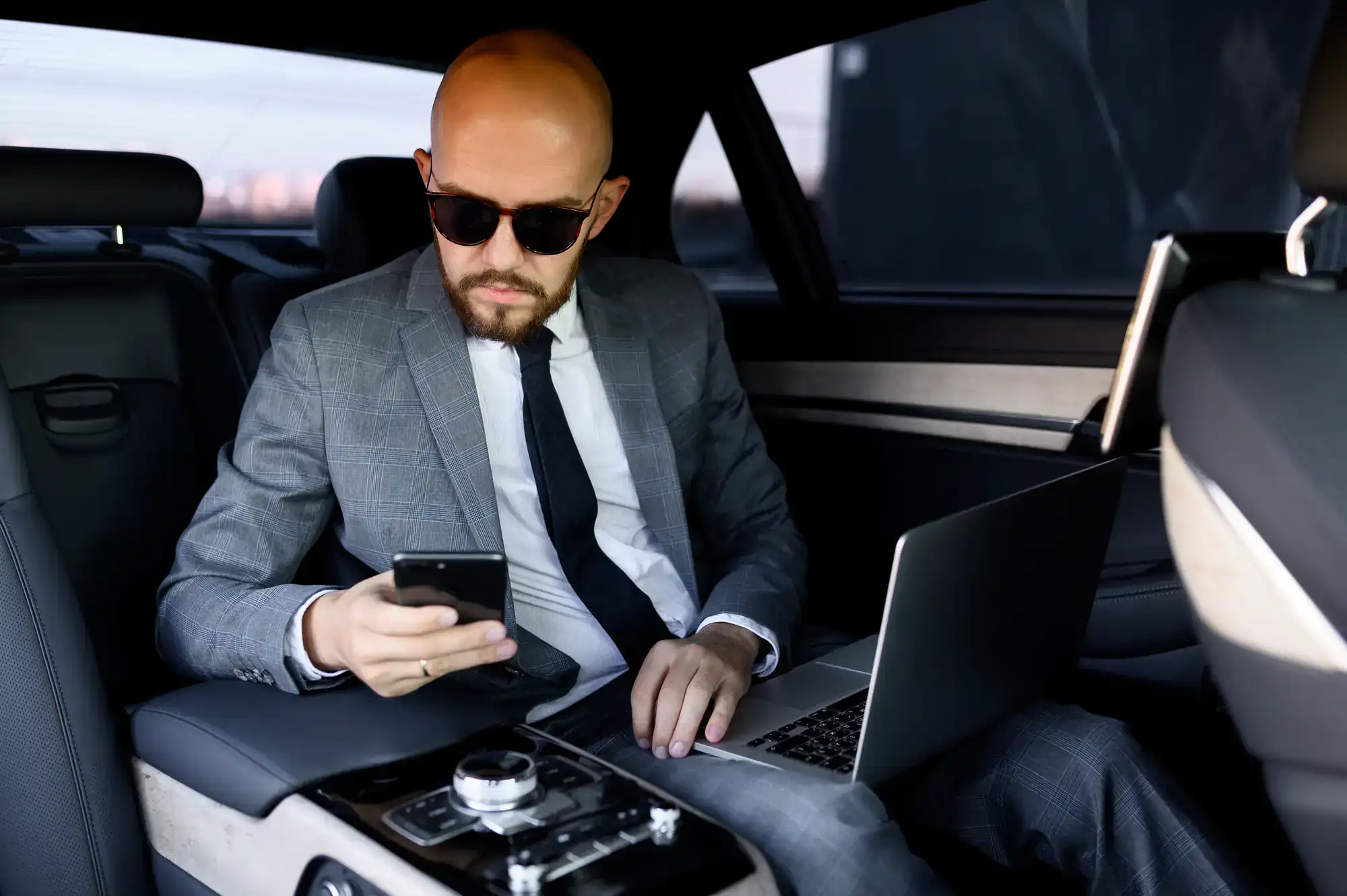
Privacy and confidentiality become critical when discussing sensitive business matters. Inside a professional black car, it’s just you—no strangers, no shared rides, no concern about who might overhear your strategy call or see the documents on your laptop. That privacy is one of the biggest reasons executives skip rideshare entirely for business travel.
Safety standards differ significantly between professional services and rideshare platforms. Our chauffeurs undergo rigorous background checks, commercial driver training, and ongoing certification. Our vehicles carry commercial insurance with $1 million+ coverage, compared to the limited personal auto policies that back most rideshare trips. Rigorous driver vetting and commercial insurance reduce accident risk by 60% compared to standard rideshare alternatives.
Companies with duty-of-care obligations—legal and ethical responsibility for employee safety during business travel—find that professional car services meet those standards in ways rideshares cannot consistently deliver. When you send an executive or employee on a business trip, you’re accountable for their safety. Professional transportation provides the documentation, insurance, and accountability structure that duty of care requires.
The choice between black car service and rideshare isn’t about one being universally better—it’s about matching the service to the situation. Rideshares work for casual, flexible trips where timing isn’t critical and image doesn’t matter. Professional car services make sense when reliability, productivity, and professional presentation are non-negotiable.
For Nassau County business travelers managing airport transfers to JFK, LaGuardia, or Newark, client meetings in Manhattan, corporate events, or executive itineraries across Long Island, the professional option consistently delivers better outcomes. You arrive on time, prepared, and in control. Your transportation doesn’t become the variable that derails your day.
When your business demands the best, we provide the reliability, professionalism, and service quality that corporate travel requires.
Article details:
Share:
Continue learning: